
EQUALS - Music Social Network
Equals Collective LimitedMusic & Audio
3.588.00 Reviews
- Version
- 0.1.270
- Installs
- 1.00M
- Age Rating
- Teen
Screenshots
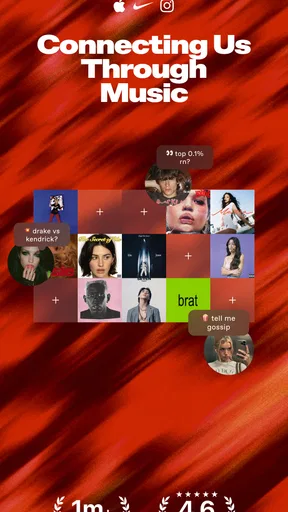
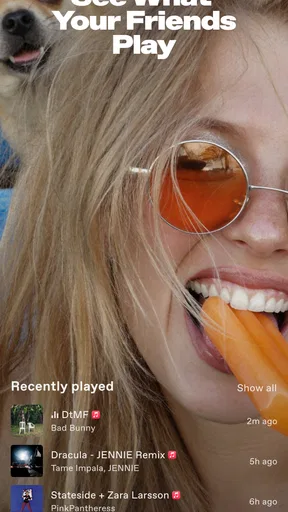
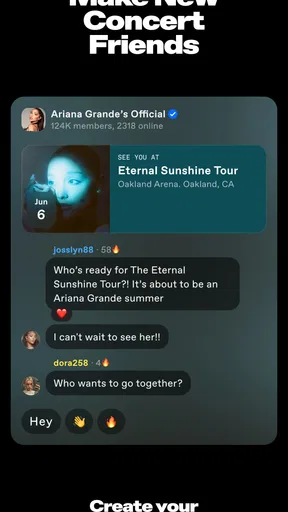
Our Review of EQUALS - Music Social Network
 Analysis by Appyee
I approached EQUALS as a music app with a social center rather than another place to press play and leave. Its main idea is simple but meaningful: music becomes a reason to share opinions, start conversations, and meet people whose taste overlaps with yours. That focus changes the experience from private listening to public discovery. You are not only asking what to hear next; you are also deciding how much of your personality you want your music choices to reveal.
That distinction matters because many music services already handle playback, playlists, and recommendations well. EQUALS - Music Social Network is trying to solve a different problem: the awkward gap between finding a song you love and finding someone who understands why you love it. In my experience, the app is most interesting when I use it as a conversation starter. It feels less useful when I expect the depth, catalog control, or listening tools of a traditional streaming service.
Music opinions are the feature that changes the whole experience
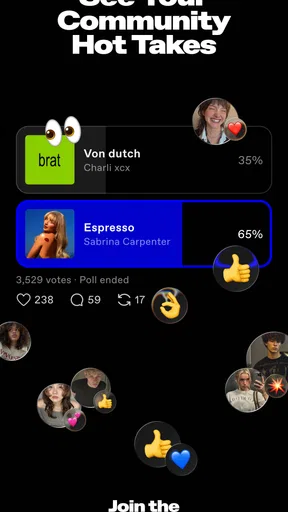
The central capability is the combination of hot takes, chats, and new connections. Instead of treating music as a silent activity, the app gives opinions a visible role. A track, artist, or musical preference can become the beginning of a discussion, and that makes discovery feel more personal than scrolling through an automatically generated list.
I like this approach because a recommendation from another person carries context. A conventional algorithm may suggest something because it resembles what I played before. A person can explain that the bass is unusually strong, that the lyrics work better late at night, or that the song reminds them of a particular period in their life. Even a short opinion can make me more curious than a row of perfectly matched thumbnails.
The “hot take” angle also gives the app a clear social rhythm. It encourages users to react, agree, disagree, and explain themselves. That can be more rewarding than pressing a generic like button, especially when the topic is specific enough to invite a real response. The best discussions are not necessarily about whether a song is objectively good. They are about why it works for one listener and fails for another.
There is an important trade-off here. Social music apps depend on the quality and activity of their communities. A streaming app can still be useful when I am alone because its catalog and playback tools carry the experience. EQUALS becomes stronger when other users are posting and responding in ways that feel genuine. If the conversation around a particular style is quiet, the app may feel less valuable than a standard music service.
The developer behind it is Equals Collective Limited, and the app sits in the Music & Audio category. It is free to start, with optional in-app purchases ranging from $3.49 to $46.99 per item. I would treat that pricing structure as a reason to explore the free experience carefully before spending money. The social concept should be useful to you on its own; paying should not be the first step in deciding whether the community fits your personality.
Why opinions can be more useful than another recommendation engine
When I am tired of familiar recommendations, I usually do not need more songs that sound almost identical to what I already know. I need a different route into music. A person’s argument, joke, unpopular opinion, or enthusiastic defense can provide that route. EQUALS has an advantage here because it puts the human explanation close to the musical subject.
This is also where the app can help people who struggle to talk about music in ordinary social settings. Starting a conversation with “What are you listening to?” can feel vague. Responding to a specific opinion is easier. You can challenge it, add an example, or ask what led the person to that view. The app’s capability is therefore not just discovery; it is reducing the effort required to begin a music-related conversation.
I found that the most useful mindset is to read posts as invitations rather than verdicts. If I treat every opinion as a competition, the social side becomes tiring quickly. If I use it to collect leads, I can save the names of artists and songs that come up repeatedly, then listen to them later in the service I already use. That workflow makes EQUALS valuable even when it is not replacing my main player.
How the social flow works in everyday use
The app’s appeal is easiest to understand through a normal evening. Imagine that I have finished work, put on headphones, and want something different without committing to a long search. In a conventional service, I might open a playlist or browse recommendations. In EQUALS, I can instead look for an opinion that catches my attention, follow the thread of replies, and use the conversation to decide which artist or song deserves a listen.
That sequence is more active than passive playback. I am not simply accepting an algorithm’s next choice. I am comparing reactions, noticing which comments explain their reasoning, and forming my own position. The result can be slower than hitting a playlist, but it is also more memorable. I am more likely to remember a song connected to a funny disagreement than one that appeared in an anonymous recommendation row.
A useful habit is to separate discovery from listening. I would browse EQUALS when I have a few minutes to explore, note down promising names, and then switch to my regular audio setup for uninterrupted playback. This avoids expecting the social feed to behave like a full music library. It also gives each tool a clear job: EQUALS supplies human context, while a dedicated streaming service handles the long listening session.
Another practical tip is to respond with a reason instead of a one-word reaction. Saying “I agree” rarely creates much momentum. Explaining which part of a track convinced you, or naming a similar artist, gives other people something to answer. That small change improves the quality of the conversation and makes it easier for like-minded users to find you.
The same principle works in reverse. If I want to meet people with compatible taste, I should make my own preferences specific. A broad statement about liking pop or hip-hop says very little. A comment about a production choice, an overlooked album, or the mood in which a song works gives others a clearer opening. The app rewards participation that reveals a point of view, not just activity for its own sake.
What I would check before paying for anything
Because the app is free with optional purchases, I would first spend enough time testing whether the conversations feel natural to me. I would look at how quickly I can find discussions I care about, whether replies add substance, and whether I enjoy sharing my own opinions. Those questions are more important than access to an extra purchase because the app’s core value is social compatibility.
I would also avoid assuming that every person I meet through a music discussion will become a lasting connection. The app can create openings, but a good conversation still depends on mutual effort. Some exchanges may be brief, and that is not necessarily a failure. A short interaction that points me toward an artist can still be useful, even if it does not turn into an ongoing friendship.
For younger users, the content rating is Teen, so I would still approach the social features with ordinary online caution. Music preferences can feel personal, but they are not a substitute for knowing someone well. I would keep conversations respectful, avoid sharing sensitive personal details, and remember that disagreement is part of the format rather than proof that a discussion has gone wrong.
The strongest scenario is discovery with a social purpose
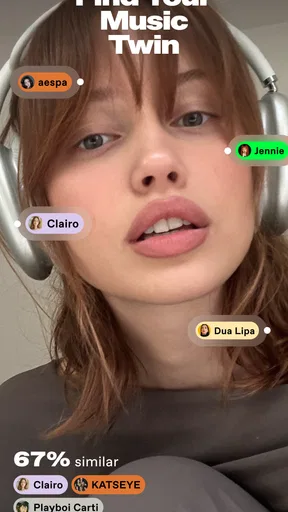
The app makes the most sense for someone who wants to expand their listening while meeting people around a shared interest. A realistic example would be a listener who has recently moved to a new city and does not yet know where to find people with similar taste. Rather than joining a general social platform and hoping music comes up, that person can begin with a focused subject that already matters to them.
It can also work for a group of friends who constantly argue about albums and artists. EQUALS gives those debates a more natural home than a private message thread that disappears among unrelated conversations. Each person can bring a different perspective, and the discussion itself can expose everyone to music they would not have searched for independently.
I see a quieter use case too. Someone who listens alone may not want to post constantly, but could still benefit from reading how other people describe music. This is especially helpful when I am stuck in a listening rut. Instead of asking an algorithm to guess my next favorite, I can borrow someone else’s curiosity and follow the trail they have already started.
The app may be less suitable for a person who wants a clean, uninterrupted audio tool. If your priority is downloading albums, managing a carefully organized library, adjusting playback in detail, or listening without social interaction, a conventional streaming platform is likely the better choice. EQUALS should be viewed as a companion to those services, not automatically as a replacement for them.
It is also not ideal for someone who dislikes public disagreement. The hot-take format naturally creates strong reactions. Even when discussions remain friendly, the app’s energy comes from people having different opinions. If you prefer music to remain entirely private and relaxing, the social layer may feel like unnecessary noise rather than added value.
A practical workflow for getting more from the community
I would begin by observing rather than trying to post immediately. Spend a short session identifying which conversations attract thoughtful replies and which ones are mostly quick reactions. This reveals the tone of the community that you are actually likely to use, rather than the tone you imagine from the app’s concept.
Next, I would choose a narrow interest to explore. Instead of searching for “good music,” I might follow a particular mood, era, scene, or production style that I already enjoy. Specific interests make it easier to recognize knowledgeable users and easier to contribute something useful myself.
When I discover an artist through a discussion, I would listen before replying with a strong judgment. This sounds obvious, but it is a valuable distinction in an opinion-driven app. A quick reaction based only on a short clip or someone else’s description can produce shallow conversation. Taking the time to hear the music gives my response more credibility and helps me decide whether the recommendation really fits me.
Finally, I would keep a simple record of discoveries outside the social feed. A note on my phone with the artist, song, and the reason it caught my attention is enough. This is a non-obvious advantage of separating conversation from playback: I can preserve the context that made a recommendation interesting, then return to it later when I am in the right mood to listen.
Where the social approach creates friction
The biggest limitation is that social value is uneven. Some days may produce lively exchanges and unexpected discoveries. Other days may feel repetitive, especially if the same popular subjects dominate attention. That variability is normal for a community product, but it means I would not rely on the app as my only source of music discovery.
There is also a difference between visibility and connection. Seeing many opinions does not automatically mean I am building meaningful relationships. The app can lower the barrier to meeting people, but I still have to choose which conversations deserve time. In practice, a smaller number of thoughtful exchanges is more valuable than rapidly reacting to everything in sight.
Hot takes can be entertaining, but they can also reward confidence over careful listening. A dramatic opinion may attract attention even when it offers little insight. I would therefore judge discussions by the quality of their reasoning, not by how forceful or popular they appear. This is one of the main trade-offs of making opinions central: the format is lively, but liveliness is not the same as depth.
Another point to consider is attention. A social feed can turn music discovery into another stream of notifications, reactions, and unfinished conversations. If I open the app intending to find one song and leave much later without listening to anything, the social layer has become a distraction. Setting a specific goal helps: discover two artists, read one discussion, or post one considered response, then close the app.
Version 0.1.239 shows that the product is still at an early stage of its development. I would interpret that as a reason to expect the experience to evolve rather than as a promise that every part already feels mature. Early-stage apps can be exciting because the community is still forming, but they can also have rough edges in navigation, participation, or consistency. I would be comfortable experimenting with it, while keeping my main music setup elsewhere.
On the positive side, the app has already attracted over 500 thousand installs and holds a 4.0 average from around 5.2 thousand ratings. Those figures suggest that the idea has reached a meaningful audience, but they do not guarantee that every music niche will be equally active. I would judge its fit by the conversations I can actually find, especially if my taste is outside the most visible genres.
Who benefits most from EQUALS
I would recommend EQUALS to curious listeners who enjoy explaining their taste as much as discovering new music. It is particularly well suited to people who want a low-pressure way to meet others through a shared interest. You do not need a perfect music vocabulary or an enormous collection of obscure favorites. A clear opinion and a willingness to listen to other viewpoints are more important.
It is also a good fit for anyone who feels that algorithmic recommendations have become predictable. The app introduces a human filter, and that filter can be messy in a useful way. People notice details, moods, and connections that automated systems may not express well. The trade-off is that the results are less consistent, so you need patience and a willingness to browse.
I would skip it if I only want a private player, a meticulously managed library, or a dependable background soundtrack with no social involvement. In those cases, a standard Music & Audio service will likely offer a more direct experience. I would also skip it if I know that public arguments about taste make me anxious or impatient; the app’s identity is built around interaction, not silent consumption.
For me, the best way to use it is alongside an established listening service. I can discover an artist through a conversation, listen wherever my library is stored, and return to EQUALS to explain what I thought. That loop feels more natural than forcing one app to handle every stage of the process. The social network becomes a source of context and motivation rather than a replacement for familiar audio tools.
There is no subscription price to weigh at the starting point because the app is free, but optional purchases mean I would still make a deliberate decision before buying. I would ask whether the purchase improves a part of the experience I already use regularly, rather than paying in the hope that it will create a community for me. No paid option can substitute for active, compatible conversations.
My final view is positive but specific: EQUALS is worth trying if the idea of discussing music with strangers sounds exciting rather than exhausting. Its strongest capability is not simply showing what other people like. It gives music a social explanation, and that can make unfamiliar artists feel approachable. The real payoff comes from turning a recommendation into a conversation, then turning that conversation into your own listening choice.
After using it with that expectation, I see a clear place for the app. It is a discovery and connection layer for listeners who want more personality than an algorithmic feed provides. It is not the right tool for every listening session, and its community-driven nature will always create uneven moments. Still, if you enjoy a good musical disagreement and want new friends to enter through a shared passion, EQUALS offers a distinctive route that is easy to explore without paying at the door.
Privacy and Permissions
See what permissions an app requests and how it handles your data.
- Contacts
- read your contacts, modify your contacts
- Location
- approximate location (network-based), precise location (GPS and network-based)
- Photos/Media/Files
- read the contents of your USB storage, modify or delete the contents of your USB storage
- Storage
- read the contents of your USB storage, modify or delete the contents of your USB storage
- Camera
- take pictures and videos
- Microphone
- record audio
- Wi-Fi connection information
- view Wi-Fi connections
- Other
- view network connections, change network connectivity, full network access, change your audio settings, run at startup, draw over other apps, control vibration, prevent device from sleeping, Google Play license check
Verdict
Strengths of EQUALS - Music Social Network
- Discover and share music with people who have similar tastes.
- Simple interface makes browsing profiles and tracks easy.
- Useful for finding new artists outside mainstream charts.
- Social interactions can make music discovery feel more personal.
- Supports building a music-focused identity and community.
Limitations of EQUALS - Music Social Network
- The user base may be smaller than on mainstream social platforms.
- Some features may depend on linking an external music service.
- Content quality can vary depending on community activity.
- Notifications may become distracting if social activity increases.
- Privacy settings should be checked before sharing listening preferences.
Similar Picks in This Category
View All
YouTube Music
Google LLC4.4

Samsung Music
Samsung Electronics Co., Ltd.3.8

Spotify: Music and Podcasts
Spotify AB4.3

JioSaavn - Music & Podcasts
Saavn Media Limited4.3

Lark Player:Music Player & MP3
Lark Player Studio - Music, MP3 & Video Player4.6

StarMaker: Sing Karaoke Songs
SKYWORK AI PTE. LTD.4.3
Frequently Asked Questions
What is EQUALS - Music Social Network, and how does it work?
EQUALS - Music Social Network is designed for people who want to discover music and connect with others through shared listening interests. After creating a profile, you can explore music-related content, interact with the community, and potentially find users with similar tastes. The experience focuses on social discovery rather than functioning only as a traditional music player or streaming catalog.
Do I need an account to use EQUALS - Music Social Network?
An account is generally required to access the app’s social features, such as creating a profile, following or interacting with other users, and sharing your musical preferences. Registration may involve an email address, a third-party login, or other basic information. Before signing up, review the permissions and privacy details so you understand what information is collected and how your profile activity may be displayed.
Can I listen to full songs directly inside EQUALS?
EQUALS is primarily built around social music discovery, so its listening options may depend on integrations, available content, and regional restrictions. It should not automatically be treated as a replacement for established streaming services with extensive licensed catalogs. Some features may direct you to another music platform or rely on links and previews, so check the current app description to confirm exactly what playback functionality is available.
Is EQUALS - Music Social Network free to download and use?
The app may be available to download without an upfront charge, but availability of premium features, optional purchases, advertisements, or subscription plans can vary by platform and region. We recommend checking the Google Play Store or Apple App Store listing before installing it. Pay particular attention to in-app purchase information, renewal terms, and whether certain social or discovery tools are restricted behind a paid plan.
Is EQUALS safe for sharing my music preferences and interacting with other users?
As with any social network, you should use EQUALS thoughtfully and avoid sharing sensitive personal information in your profile or conversations. Review its privacy policy, account settings, and permission requests before using the service. If the app includes messaging, public posts, or follower features, use available blocking and reporting tools when necessary, and remember that music preferences, activity, and profile details may be visible to other members.
